
-
By jagdambaengineering_admin
-
March 5, 2026
- 0 Comment
5 Key Factors That Affect Stone Polishing Quality in Industrial Processing
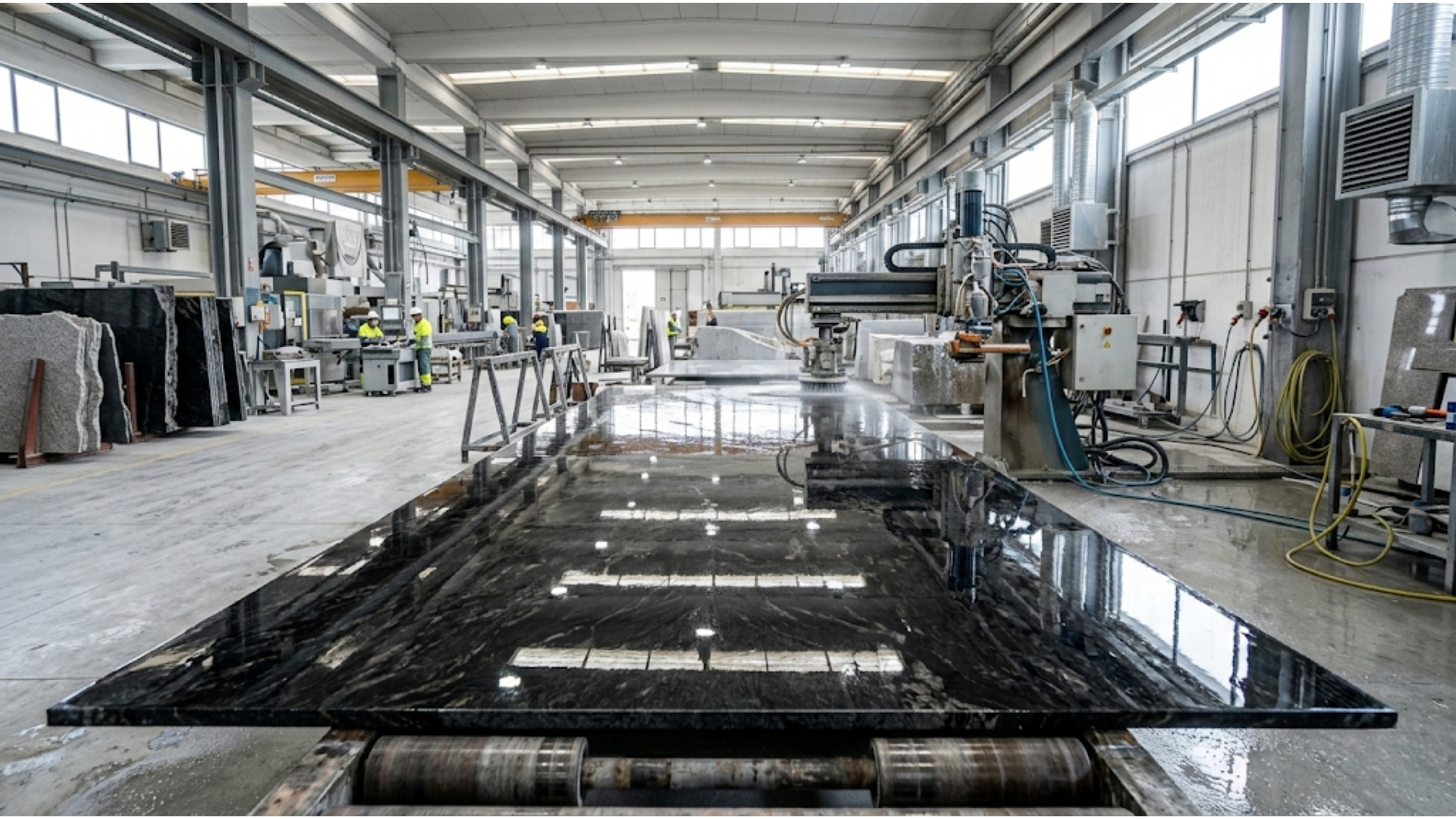
In the stone processing industry, achieving a high-quality polished surface is essential. Whether the stone is used for flooring, countertops, or architectural applications, the final appearance depends heavily on the polishing process.
Several factors influence the quality of stone polishing. Understanding these factors helps stone manufacturers improve production efficiency and deliver better finished products.
1. Quality of Polishing Heads
One of the most important factors affecting polishing quality is the design and performance of the polishing head.
Polishing heads hold abrasive tools and apply controlled pressure on the stone surface. Precision-engineered polishing heads ensure even pressure distribution and smooth rotation, which leads to consistent surface finishing.
Poor-quality polishing heads may cause uneven polishing, vibration, and faster tool wear.
2. Type of Abrasive Tools
Different polishing stages require different abrasive tools. Coarse abrasives are used during the initial grinding stage to remove surface imperfections.
As the polishing process continues, finer abrasives are used to refine the surface and create a glossy finish.
Using the correct sequence of abrasive tools is essential for achieving a smooth and reflective stone surface.
3. Machine Stability
Machine stability plays a significant role in polishing performance. Vibrations during the polishing process can cause irregular polishing patterns and surface defects.
High-quality polishing heads and well-maintained machines help reduce vibration and improve polishing accuracy.
4. Proper Calibration of Stone Slabs
Before polishing begins, stone slabs must be properly calibrated. Calibration ensures uniform slab thickness and smooth surfaces.
Without proper calibration, polishing abrasives may not contact the stone surface evenly. This can result in inconsistent polishing quality.
Calibration heads play a crucial role in preparing slabs for polishing.
5. Operator Expertise and Process Control
Even with advanced machinery, skilled operators are essential for maintaining high polishing standards. Monitoring machine settings, abrasive conditions, and polishing stages helps ensure consistent results.
Proper process control allows stone processing plants to achieve reliable polishing quality across large production batches.
Achieving Superior Surface Finish
When all these factors work together—precision polishing heads, quality abrasives, stable machines, proper calibration, and skilled operation—the result is a smooth, glossy stone surface.
High-quality polishing enhances the natural beauty of granite, marble, and quartz stone and increases the commercial value of the finished product.
Conclusion
Stone polishing quality depends on several technical and operational factors. By focusing on equipment quality, machine stability, and proper polishing techniques, stone processing industries can achieve consistent finishing results.
Investing in reliable polishing heads and calibration systems ensures long-term production efficiency and superior stone surface quality.