
-
By jagdambaengineering_admin
-
March 5, 2026
- 0 Comment
Importance of Calibration Heads in Stone Processing Machines
In the stone processing industry, achieving uniform slab thickness is one of the most critical steps before polishing begins. This process is known as calibration, and it plays a vital role in ensuring the quality and consistency of the final stone product. The key component responsible for this process is the calibration head.
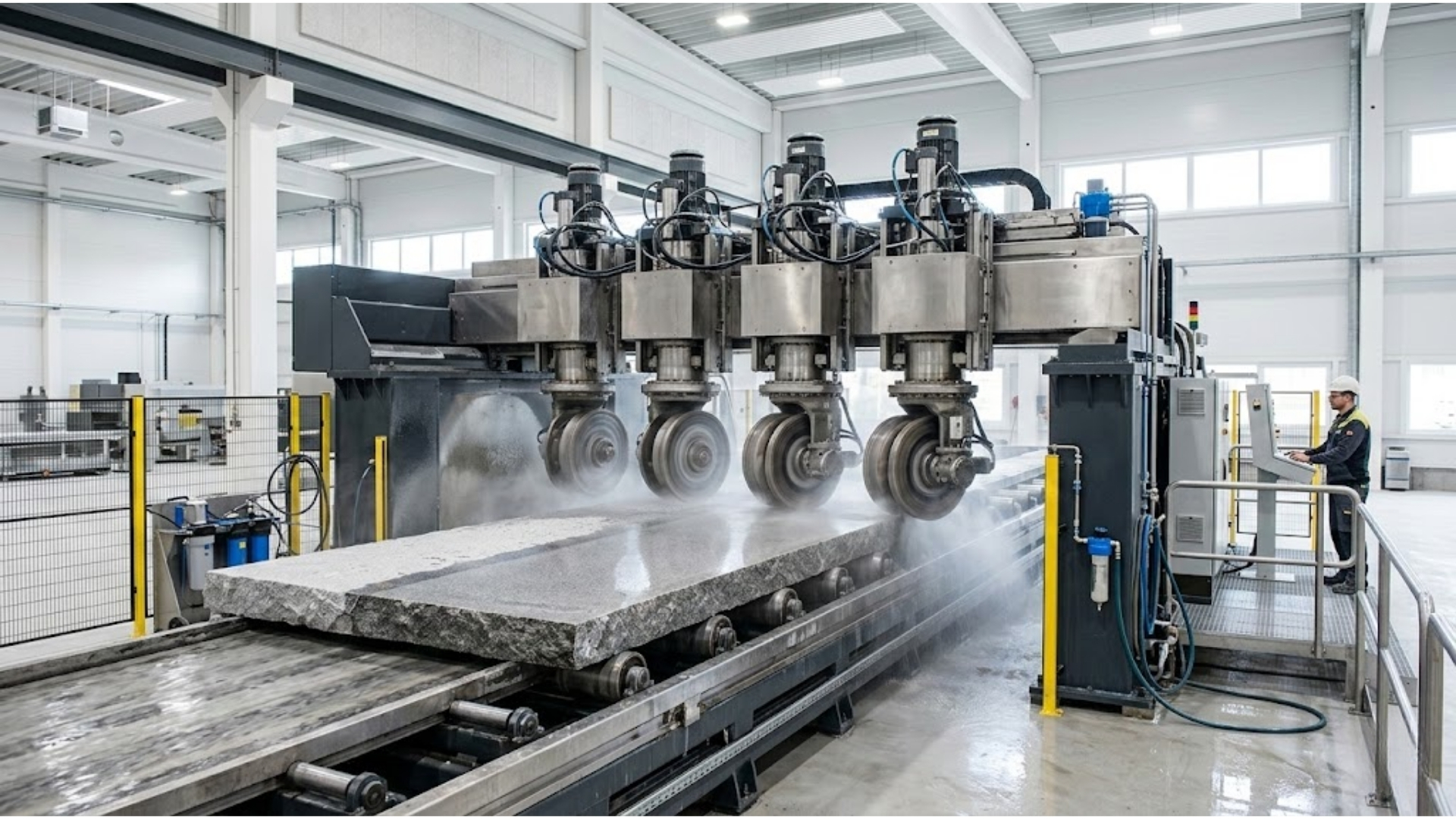
Calibration heads are specially designed machine components used in stone processing lines to grind the surface of stone slabs and achieve precise thickness. Without proper calibration, stone slabs may have uneven surfaces, which can lead to polishing defects and inconsistent product quality.
What is a Calibration Head?
A calibration head is a mechanical component installed in stone calibration machines. It holds abrasive tools that grind the stone surface and remove excess material to achieve a uniform slab thickness.
This process is usually performed before the polishing stage. Once the slab thickness is properly calibrated, the polishing process can produce a smooth and glossy finish.
Importance of Thickness Accuracy
Uniform thickness is essential for several reasons. In large-scale stone processing plants, slabs are cut into tiles, countertops, and architectural panels. If the slab thickness varies, it can cause issues during cutting, installation, and finishing.
Calibration heads ensure that each slab passes through the machine with consistent pressure and grinding action. This results in precise thickness control across the entire slab surface.
Improving Polishing Quality
Polishing machines perform best when the stone surface is properly calibrated. If the slab has uneven thickness, polishing abrasives may not make uniform contact with the surface.
This can lead to uneven gloss levels and visible polishing marks. By using reliable calibration heads, stone manufacturers can prepare slabs for polishing more effectively, resulting in superior finishing quality.
Machine Stability and Performance
High-quality calibration heads contribute to smoother machine operation. Poorly designed components may cause vibration, which can affect grinding precision and machine stability.
Precision-engineered calibration heads reduce vibration and ensure stable grinding performance. This improves both production efficiency and product quality.
Durability in Industrial Conditions
Stone processing machines operate in harsh environments with heavy loads and continuous operation. Calibration heads must be designed to withstand high grinding forces and long working hours.
Durable construction and high-quality materials ensure that calibration heads maintain consistent performance even in demanding industrial conditions.
Increased Production Efficiency
In modern stone processing plants, production efficiency is extremely important. Calibration heads play a key role in maintaining a steady production flow.
Reliable calibration systems help reduce machine downtime and maintenance requirements. This allows stone manufacturers to process larger volumes of stone while maintaining high quality standards.
Supporting Granite, Marble, and Quartz Processing
Calibration heads are widely used in the processing of granite, marble, and quartz stone. Each material requires precise grinding control to ensure consistent slab thickness.
Precision calibration heads ensure that these materials are prepared properly for polishing and finishing processes.
Conclusion
Calibration heads are essential components in stone processing machines. They ensure accurate slab thickness, improve polishing quality, and enhance machine performance.
By using high-quality calibration heads, stone processing industries can achieve better production efficiency, reliable machine operation, and superior stone finishing results.